
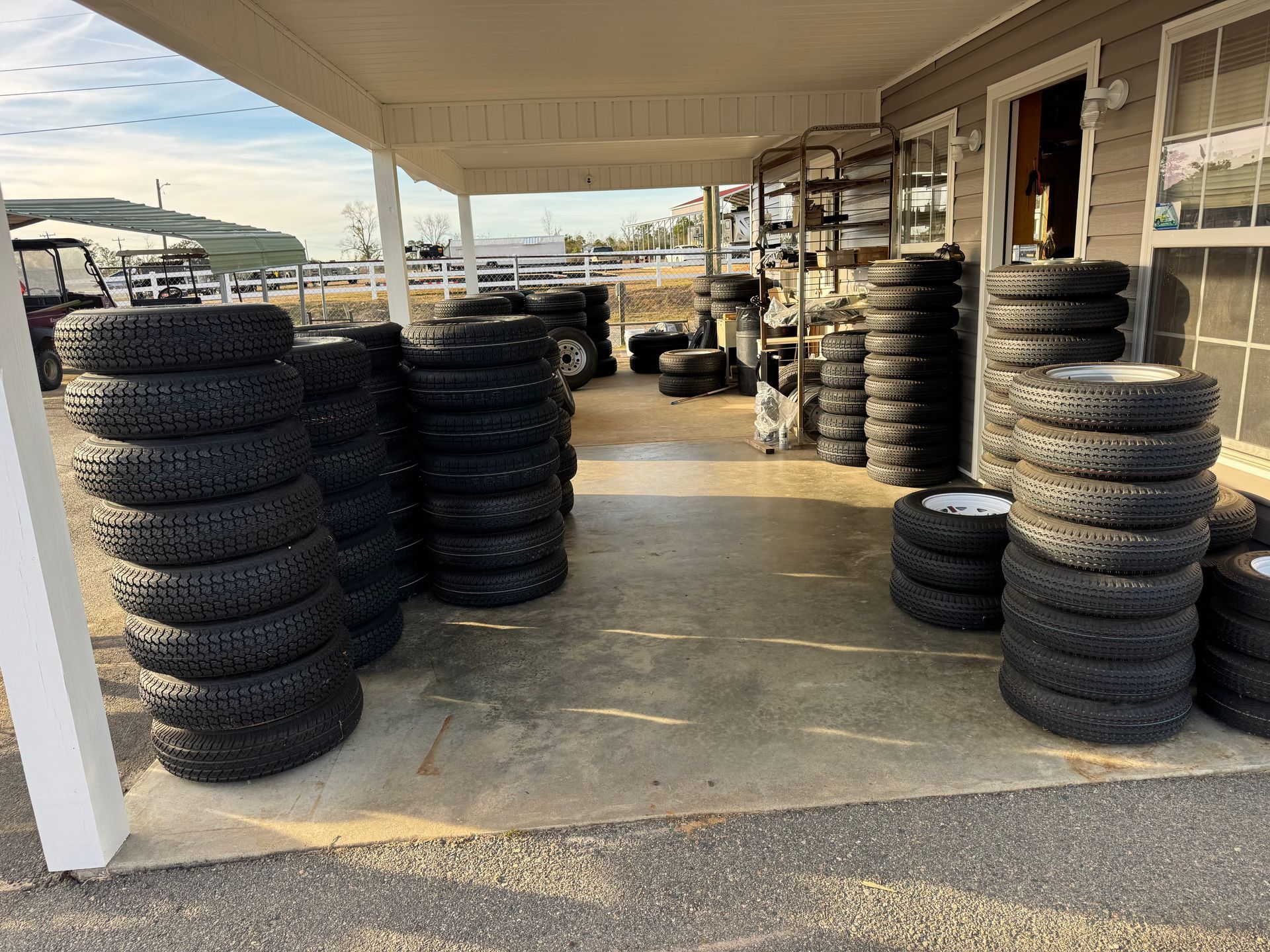
Replace Worn Tires Before They Fail
Rowell Trailer Sales supplies trailer wheels and tires designed for towing applications in Hazlehurst and Statesboro, Georgia.
You need tires rated for the weight your trailer carries and wheels that hold air pressure consistently over long trips. Rowell Trailer Sales in Hazlehurst stocks replacement wheels and tires that meet load ratings required for utility trailers, car haulers, and equipment trailers used across South Georgia. Trailer tires wear differently than passenger vehicle tires because they support stationary loads and experience different heat cycles during towing, so using the correct tire type prevents blowouts and uneven wear.
Trailer wheels and tires maintain safe towing performance by matching the axle's load capacity and keeping the tire's sidewall stiff enough to resist flexing under weight. When you replace worn tires at Rowell Trailer Sales, you can also inspect the wheel rims for rust or cracks that weaken over time. Customers in Hazlehurst and Statesboro, GA use this service to prepare trailers for heavy hauling seasons or replace tires damaged by road debris, curb strikes, or prolonged sun exposure that causes sidewall cracking.
If your trailer tires show wear or your wheels need replacement, contact Rowell Trailer Sales to review available options in Hazlehurst.
Why Trailer Tires Differ from Passenger Vehicle Tires
Trailer tires use stiffer sidewalls and different tread compounds than car tires because they carry loads without engine power turning the wheels. When you tow through Hazlehurst or Statesboro, GA, your trailer tires generate heat from friction as they support the load, and they must resist that heat without deforming. The tread pattern on a trailer tire usually runs straight across the width to reduce rolling resistance and improve tracking stability, while passenger tires use angled grooves for better cornering grip.
After you install new trailer tires, you will notice smoother towing and fewer vibrations caused by uneven tire surfaces or low air pressure. The trailer will track more consistently behind your tow vehicle, and you will experience less side-to-side sway during highway driving. Properly rated tires also reduce the risk of sudden blowouts when you haul maximum loads over rough pavement.
Rowell Trailer Sales can match replacement tires to your trailer's axle weight and rim size. Trailer wheels come in different bolt patterns, so bringing your old wheel or knowing your trailer's make and model helps confirm fitment. Trailer tires should be inflated to the pressure listed on the tire's sidewall, which is often higher than passenger vehicle tires. These tires do not include a speed rating for high-speed driving, so most are limited to sixty-five miles per hour or less to prevent overheating.
Answers to questions trailer owners ask often
Customers want to know when to replace trailer tires, how to choose the correct size, and what signs indicate a wheel or tire problem before it causes a breakdown.
Rowell Trailer Sales keeps trailer wheels and tires in stock year-round so you can replace worn components quickly and keep your trailer road-ready without delays caused by special orders. Learn more about available sizes and load ratings by reaching out to Rowell Trailer Sales in Hazlehurst.